
night game: a doozy of a baseball cry
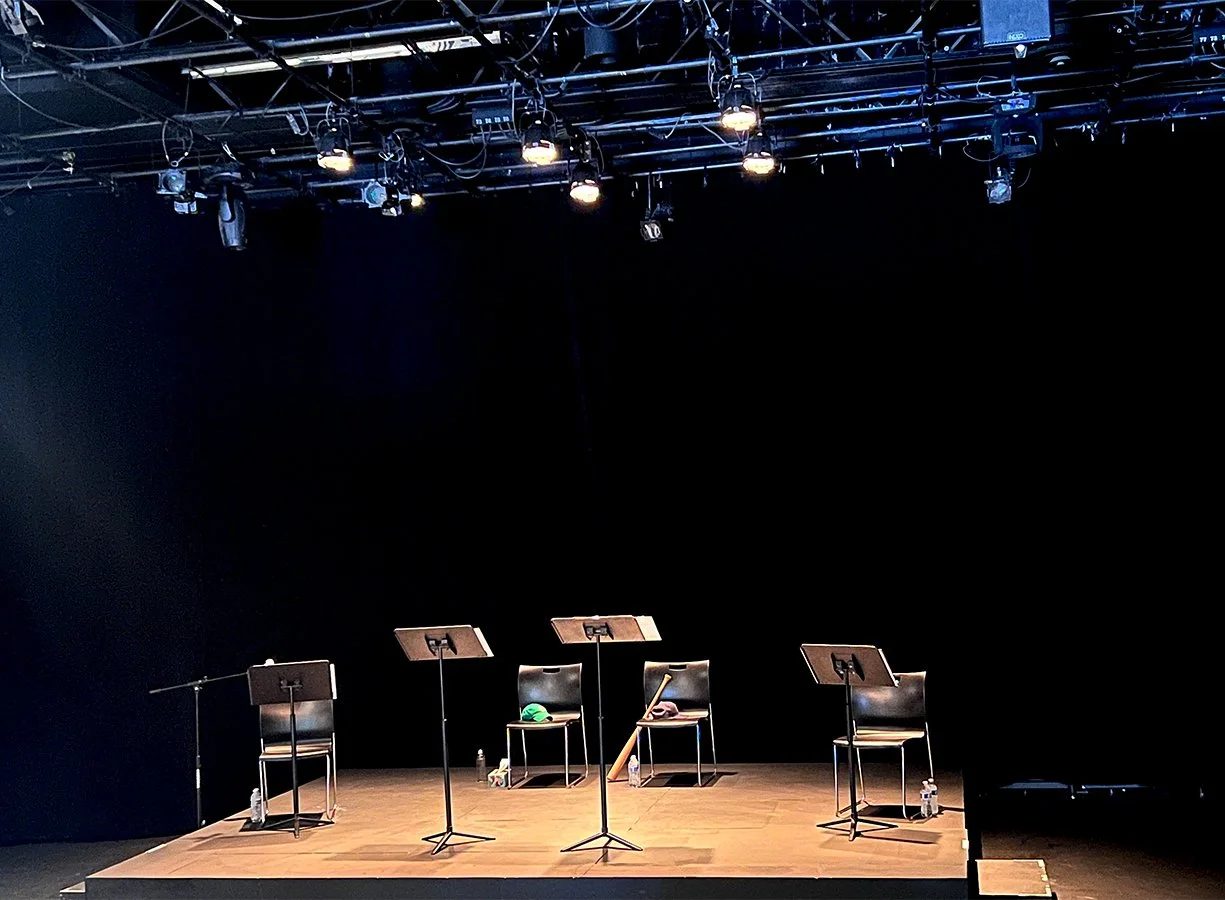
the reading stage, pre-show.
fact: i cry easily.
& if there’s no crying in baseball, that’s because ted williams’ brother isn’t dying of cancer in front of you.
mmmm… let’s back up:
i’m at the south carolina new play festival.
it’s in its fifth year. of which i’ve only missed one.
and i just saw the third staged reading of the week.
right now, i’m sitting (and typing) across the street from the warehouse theatre at one of my favourite coffee shops in town, augusta 20.

i didn’t wear waterproof mascara today (i don’t think it actually exists; i believe i’ve tried nearly all of them), so i didn’t let myself cry. but i wanted to. to let the actors know they got me. even if they couldn’t see me. i hope they know i was crying on the inside.
the show:
NIGHT GAME by octavio solis.
directed by: lisa portes
staged reading cast:
michael manuel as ted williams
jose pablo cantillo as danny williams
brock koonce as the broadcaster
another fact: i know shockingly little about history. and because i typically go into a story knowing nothing about it, well, all i knew about this one was that it was about baseball. and there was some cussing. (a poster in the lobby with the headshots of the actors made sure we knew: “this reading contains authentic baseball player profanity and R-rated language”
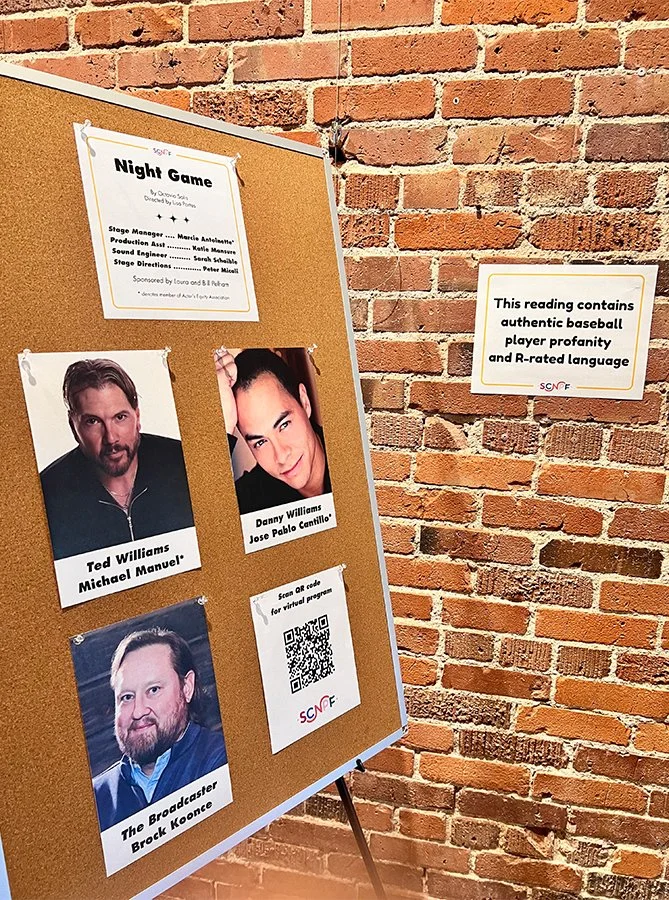
i appreciate that. (last night’s show, which i’ll blog about next, also gave us a similar lobby sign: “this reading contains authentic teenage profanity and foul language.”)
so while the first two shows i saw revolved around dads and their daughters (reductionist theme-ing proclaimed by me), this play revolved around brothers. one “left behind” in san diego. amidst his culture and family. one an all-american baseball player about to enter his 19th season—the one who has yet to admit his hispanic heritage.
ted williams is “called home,” and spends the next 90 minutes of the nearly-only-two-person-play trying to figure out what his brother wants. why he called him home. why he was called away from his all-star baseball celebrity amazing life of wealth and luxury and fame.
it’s not money. (“the stench of your money is all over this place, but you’re not here.”)
it’s not to get new doctors to stave off the cancer or more meds for the pain or new treatments.
it’s not to get danny out of debt. (again.)
it’s not to see his nephews or his senile mother.
it’s his brother’s dying wish that teddy acknowledge the fact that he’s brown. to acknowledge his mexicano heritage.
the brothers share the same mother. the same father, even. but danny is brown. teddy can pass for white.
and while the “BoSox” just signed their first negro player, they were the last team in the league to do so. and if ted admits to being Mexicano? well, all the fishing trips with hollywood actors will disappear. the private chats with the team manager in the clubhouse. the private cars and the admiring fans in the hotel lobbies.
brock koonce as the radio announcer (and other various “sports announcer/parental memory/newspaper article” voices) came in when needed for the laughs as the two disparate-situation blood brothers reminisce— good and bad— of their fend-for-themselves childhood. the father who left. the absentee mother who was following her call (and her own terrible trumpet playing) to minister to the drug addicts and orphans… ignoring her own family. (“how is that any different than me following my calling?” ted asks his brother of his baseball career away from home.)
“ask me anything but that brother,” he says.
“are you that ashamed of yourself?” danny replies.
their mother is what makes them both mexican. even if ted argues that she says she’s basque. from the region near france. but 150 years of family in mexico who moved across the border into america? certainly there’s mexican blood there too by now, says danny.
but the thing that danny doesn’t want to admit? that their father was white. irish. even more european than their “basque” mother.
it’s not the only plot twist.
and the intimacy between these two actors on stage was HEARt-Wrenching.
did i dissociate so i didn’t have to think of all the loved ones i’ve lost to cancer? so i didn’t have to feel their pain as jose (as danny) grimaced and cried and crumbled on stage? yeah. i couldn’t let myself go there with so much more of my saturday to go.
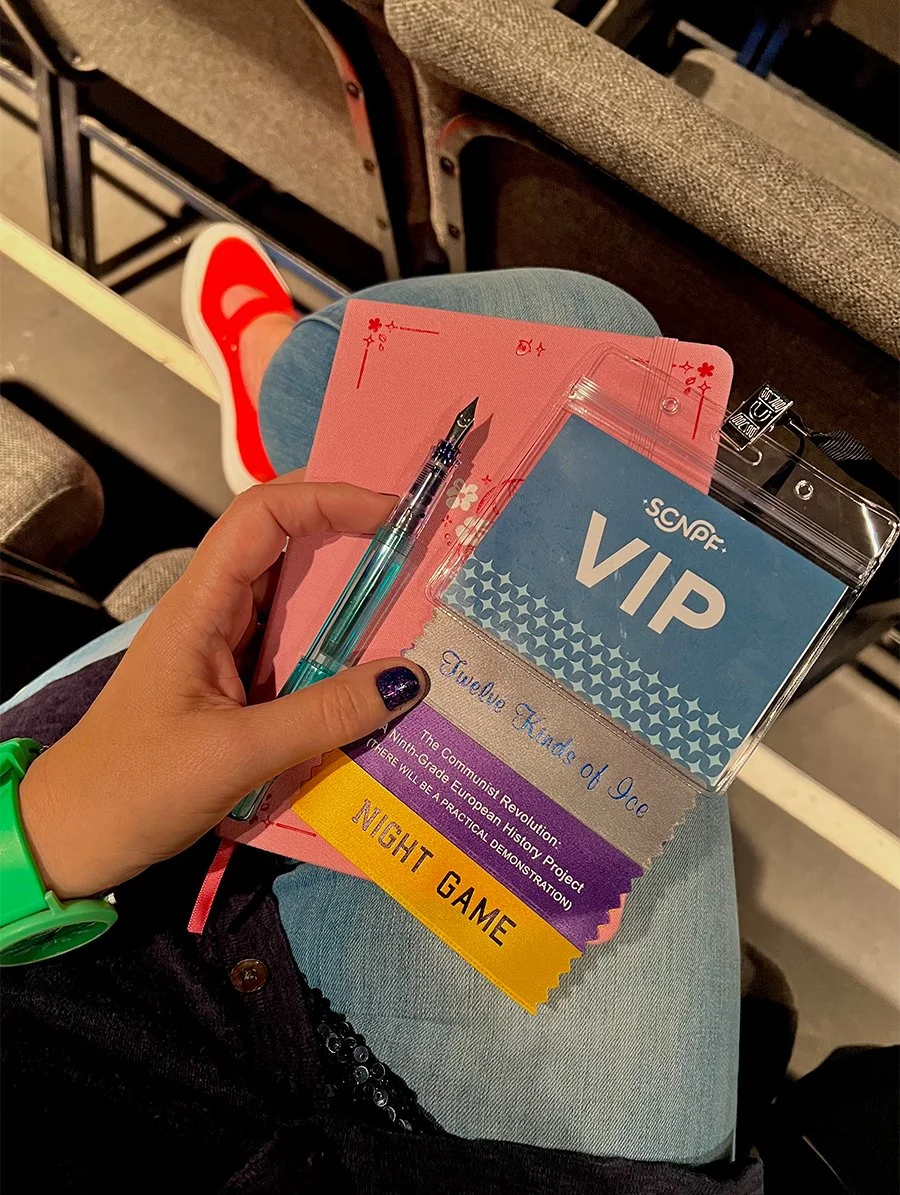
we love a collectible. one more 2026 scnpf ribbon to go! (although i missed the saturaday morning street performers, monday’s next broadway star high school competition, and the full musical production josh white’s america, i will collect my fourth and final staged reading ribbon tonight!) and, naturally, i carry a notebook to scribble on in the dark. because i like taking notes. always have. always shall.
the tearing is between the crux of the “access” ted has while being a “white” baseball player verses what danny wants: for all of the brown people to be able to cheer along with him, even as he secretly watches every red sox game (and knows all his brother’s stats—a fact that only on his death bed will he confess to his brother— his older, lanky brother who was given the charge to take care of his younger brother by his dad’s note still left on the kitchen wall.)
“i got left nothing but a house of ghosts,” danny says in one of their more heated dialogues.
and then danny is the ghost. playing one last imaginary game with ted as the play ends. just as it started, of course*: ted winding up to hit another home run. but this one makes it to the stars.
“two sons of america,” the radio announcer** declares as ted and the ghost of his brother danny (well, danny as seen in his casket; face aglow with rosy-cheeked makeup and the new suit his wife betty jean bought him at jcpenny) watch the final hit tear through the stars above.
a legacy beyond jersey #19. a legacy beyond his trading card.
did the brown kids ever know ted williams was one of them?
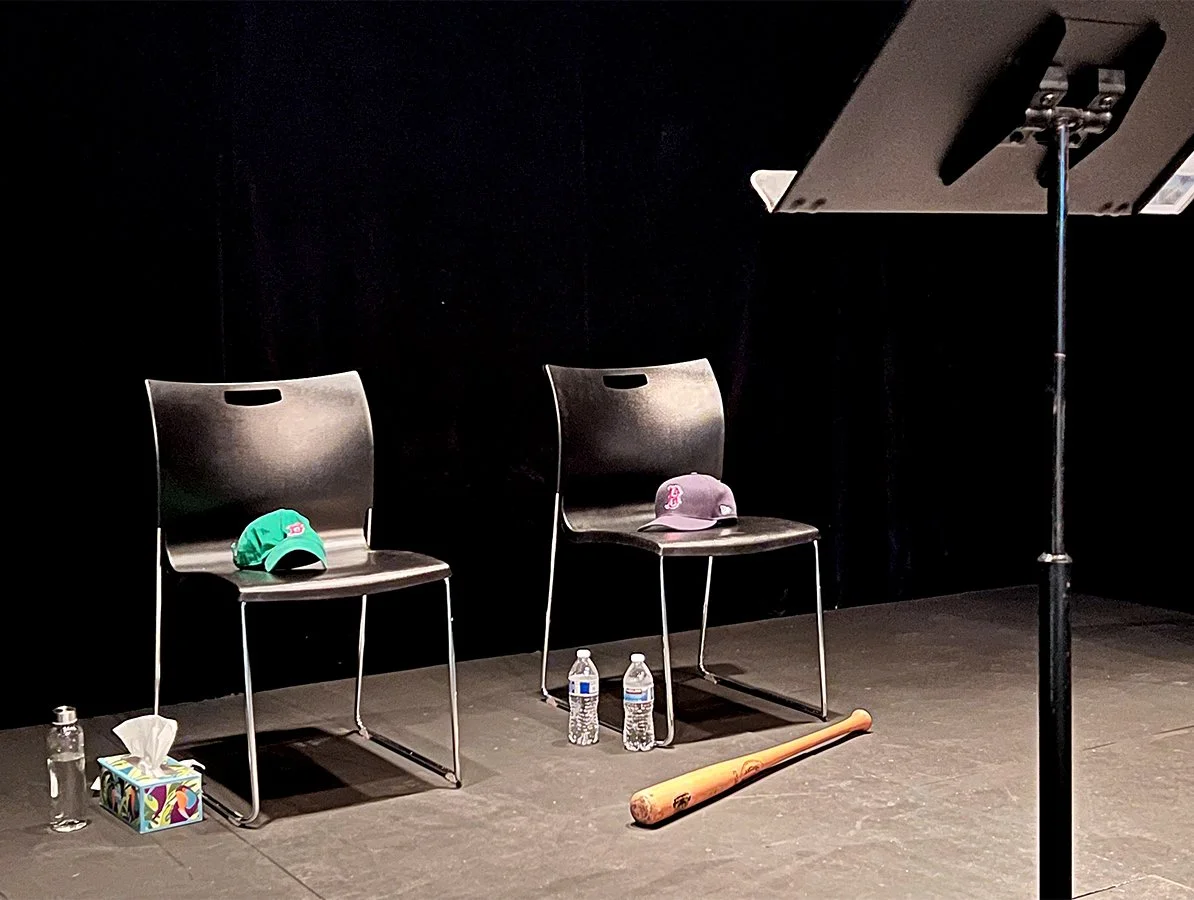
the stage after the show ended. oooooofffff. kleenex, indeed.
i don’t know. at least it gives me a question to ask. something more to learn about the immigrant experience in this gorgeous melting pot of a topsy-turvy cultural, diverse, and glorious salad we call america. and of course that comes with all the questions and the realities we still have 75+ years later. all the “access” that comes with being a white man in america.
to reckon with our upbringings. our families and cultures of origin. where we can go, where we should go. how to use our privilege &/or callings—even at the expense of those same families and cultures.
and the biggest debate:
if the fans berate and rail on you, do you ever owe them a tip of the cap?
*because formulaic western storytelling. how do mexican stories end, i want to know?? i sure don’t mind if it’s time to re-read two of my favorites: meander, spiral, explode by jane alison and spring summer asteroid bird by henry lein!
** the very visceral descriptions written for the announcer were incredible. from the visions of blacktop childhood games against navy seamen to the final scene of the two brothers sharing one last eternal game.
full SCNPF 2026 program here:
(night game credits start on page 22/46)
